
ns3-ntn-toolkit
The only open-source ns-3 distribution that simulates 3GPP Rel-17/18/19 non-terrestrial networks end-to-end - from SGP4 ephemerides through O-RAN xApps to NVIDIA Sionna ray tracing - at mega-constellation scale.







Try it now - no install
The :material-satellite: Constellation demo on Hugging Face Spaces propagates real Starlink / OneWeb / Iridium NEXT / GPS TLEs in your browser using the same SGP4 backend the full toolkit uses. World map (Plotly · natural-earth), proper Earth-rotation-aware sub-satellite tracks, topocentric elevation/azimuth/range at any observer location.
# Python side - pip-installable today
pip install ns3-ntn-toolkit              # metapackage
ns3-ntn-toolkit info                     # version + module list
What is ns3-ntn-toolkit?
ns3-ntn-toolkit is the open-source ns-3 simulation toolkit for 5G/6G non-terrestrial networks (NTN) - the only ns-3 distribution that models 3GPP Release-17/18/19 satellite networks end-to-end, from SGP4 LEO ephemerides and TR 38.811 channels through Rel-17 conditional handover and an O-RAN Near-RT RIC with xApps, to NVIDIA Sionna ray tracing and sub-THz (100 GHz–1 THz) physics - at mega-constellation scale, with measured SINR / throughput / BLER KPIs rather than closed-form formulas.
If you are researching LEO satellite networks, 5G NR-NTN, O-RAN over satellite, conditional handover, terahertz links, SAGIN, V2X-over-LEO, or AI/ML for satellite RANs, this is a ready-to-run, standards-aligned ns-3 environment built for exactly that.
It is a research-grade simulation environment built on ns-3.43 with fourteen integrated contrib modules covering the full 6G non-terrestrial stack. Standards-aligned to 3GPP TR 38.811, TR 38.821, TS 38.213/331/321, TS 22.261/23.501, O-RAN E2AP, E2SM-KPM, E2SM-RC and A1, ITU-R P.676-13, P.618-13, P.838-3 and P.840, and SAE J2735 for the vehicular messages.
What it does
-
:material-satellite-variant: Live constellations
SGP4/SDP4 propagation of real Starlink, OneWeb, Kuiper, IRIS², Iridium NEXT, Telesat. Walker-Star and Walker-Delta presets generate valid SGP4-parseable TLEs at any scale.
-
:material-radio-tower: 3GPP NR-NTN protocol stack
TR 38.811 large-scale + small-scale fading. Rel-17 SIB19 + Timing Advance pre-compensation + UE GNSS location reporting + NTN-extended DRX + regenerative-vs-transparent payload. Conditional handover with TTE estimator.
-
:material-cogs: O-RAN Near-RT RIC + FlexRIC bridge
xApps spanning beam management, slice orchestration, anomaly detection and predictive handover, on three RIC placements whose E2 latency comes from live slant geometry. E2AP, KPM and RC procedures run in-simulator over an ns-3 header with toolkit-internal type values; that is not ASN.1 APER over SCTP, and the FlexRIC bridge is where the wire-level path lives.
-
:material-wave: Sub-THz physics (100 GHz – 1 THz)
ITU-R P.676-13 line-by-line gaseous absorption over a layered atmosphere, P.618-13 scintillation, P.838-3 rain, P.840 fog. UM-MIMO, RIS quantisation sweep, ISAC CRB analysis.
-
:material-graph: AI/ML pipeline
Stable-Baselines3 + PyTorch Geometric + ns3-gym. Pre-built environments for handover, beam management, slice orchestration, power control. Multi-agent baselines are single-agent PPO/SAC over N independent environment copies, not MAPPO/MASAC: there is no centralized critic and no inter-agent coupling.
-
:material-cube-outline: GPU ray tracing (NVIDIA Sionna RT)
Optional GPU channel via Mitsuba 3 and TensorFlow, calibrated against the closed-form TR 38.811 reference. Every run prints whether its numbers were ray traced or fell back to free space, and a missing server can be made fatal rather than silent.
-
:material-airplane: SAGIN: HAPS + UAV + A2G
20 km HAPS station-keeping, UAV mobility patterns, 3GPP TR 36.777 air-to-ground channel. Multi-layer routing: ground → UAV → HAPS → LEO.
-
:material-car-traction-control: V2X over LEO
SUMO TraCI bridge for vehicular nodes consuming LEO connectivity in rural / oceanic / emergency scenarios.
-
:material-chart-line: Network slicing
eMBB, URLLC and mMTC across LEO and GEO with per-5QI dedicated bearers. SLA percentiles come from a delay histogram, so a p99 is a percentile rather than a restated mean.
-
:material-monitor-dashboard: Observability stack
InfluxDB + Grafana + NetSimulyzer 3D playback. Four pre-built Grafana dashboards. Per-slice / per-beam / per-cell KPI panels.
-
:material-earth: Live digital twin
FastAPI prediction service, TLE refresh and a CesiumJS 3D viewer. Prediction and actuation share one guard implementation, so the twin and the simulation cannot drift apart.
-
:material-server: Reproducible infrastructure
Docker compose for InfluxDB + Grafana, Docker compose for FlexRIC RIC + E2 Agent + xApps, every module with CMakeLists, every test gated.
See it run
Every animation below is rendered from a real ns-3 simulation in the toolkit - measured SINR/throughput off the radio, SGP4-propagated orbits, and live O-RAN xApp control loops.
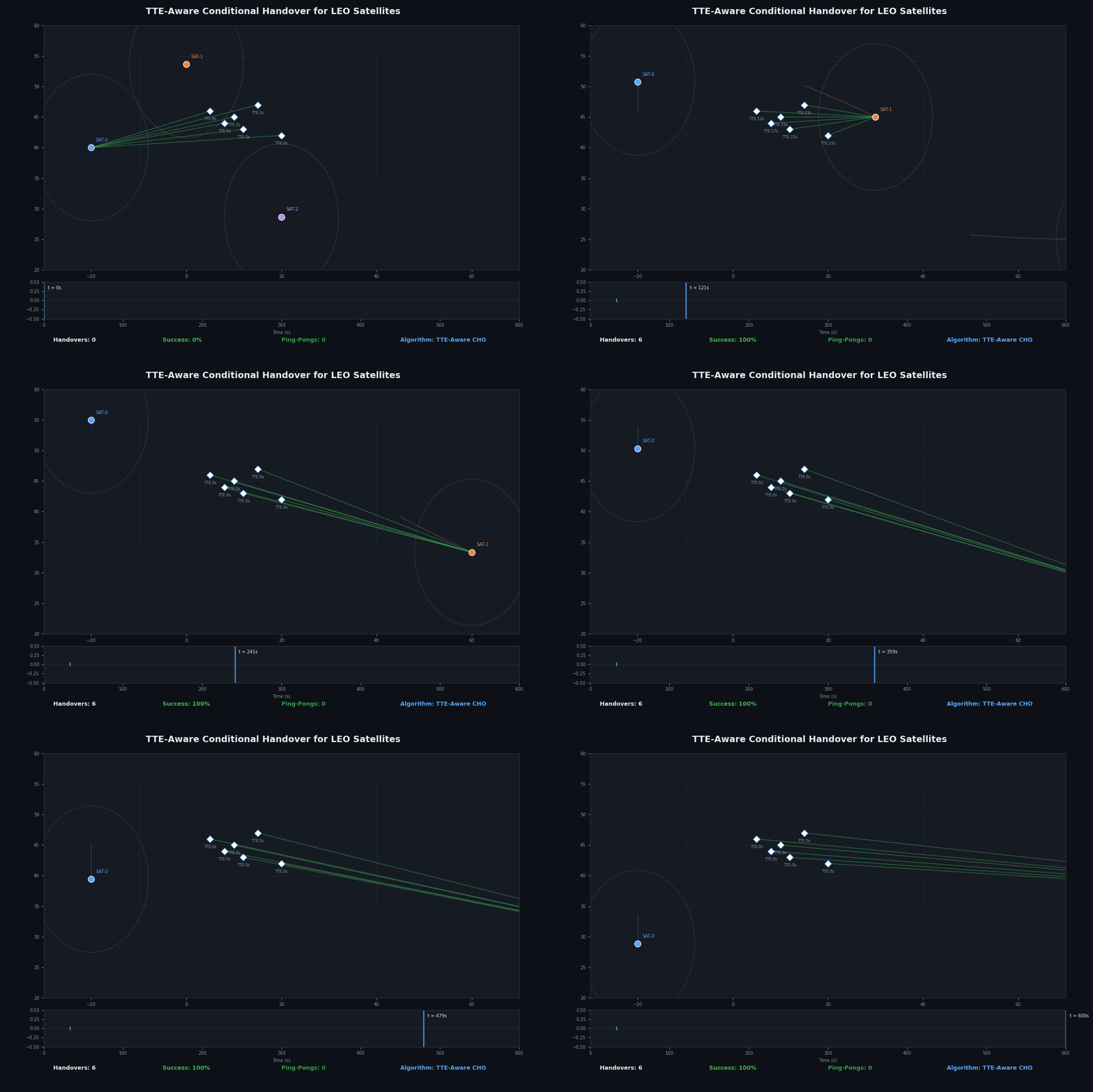
ntn-cho).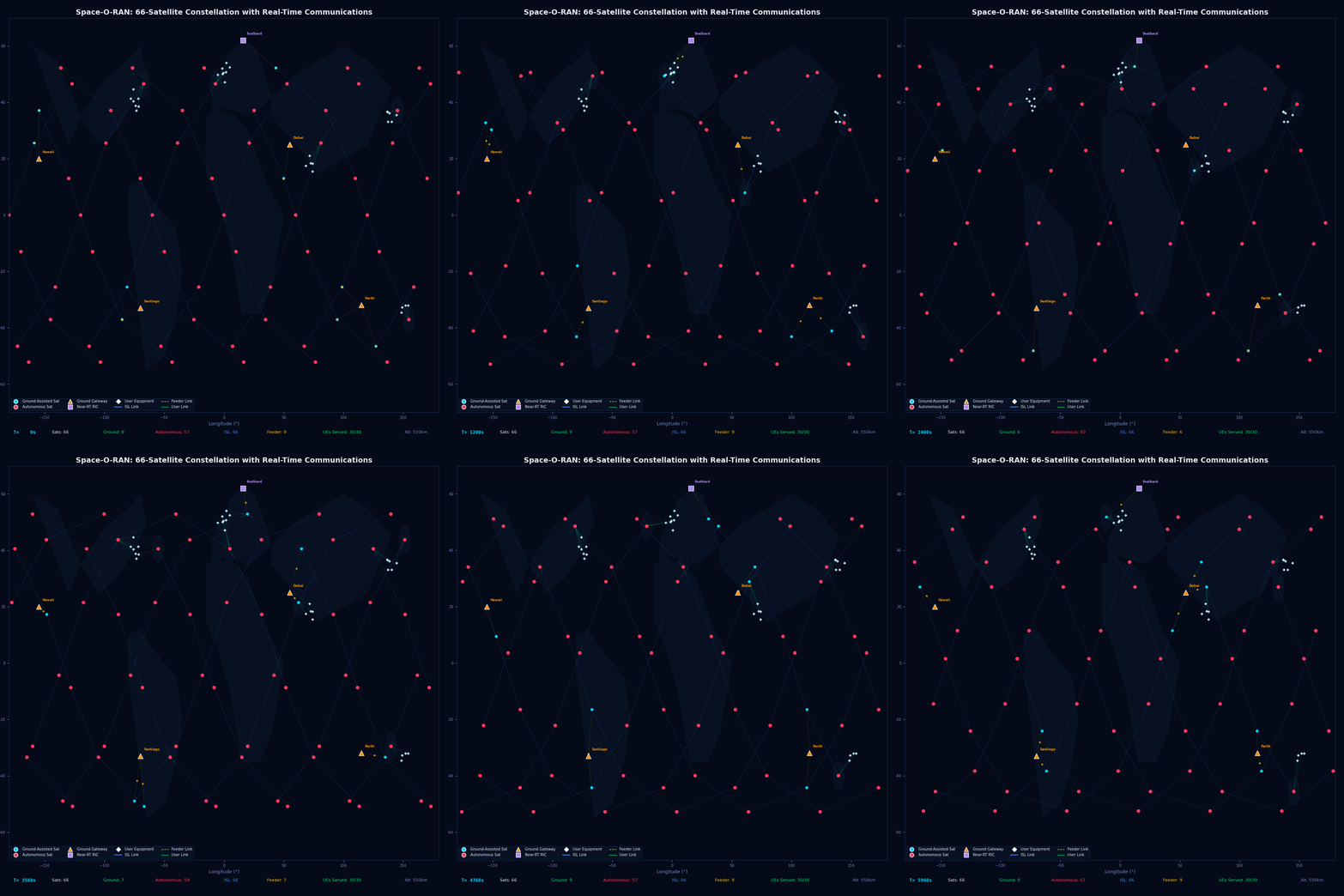
oran-ntn).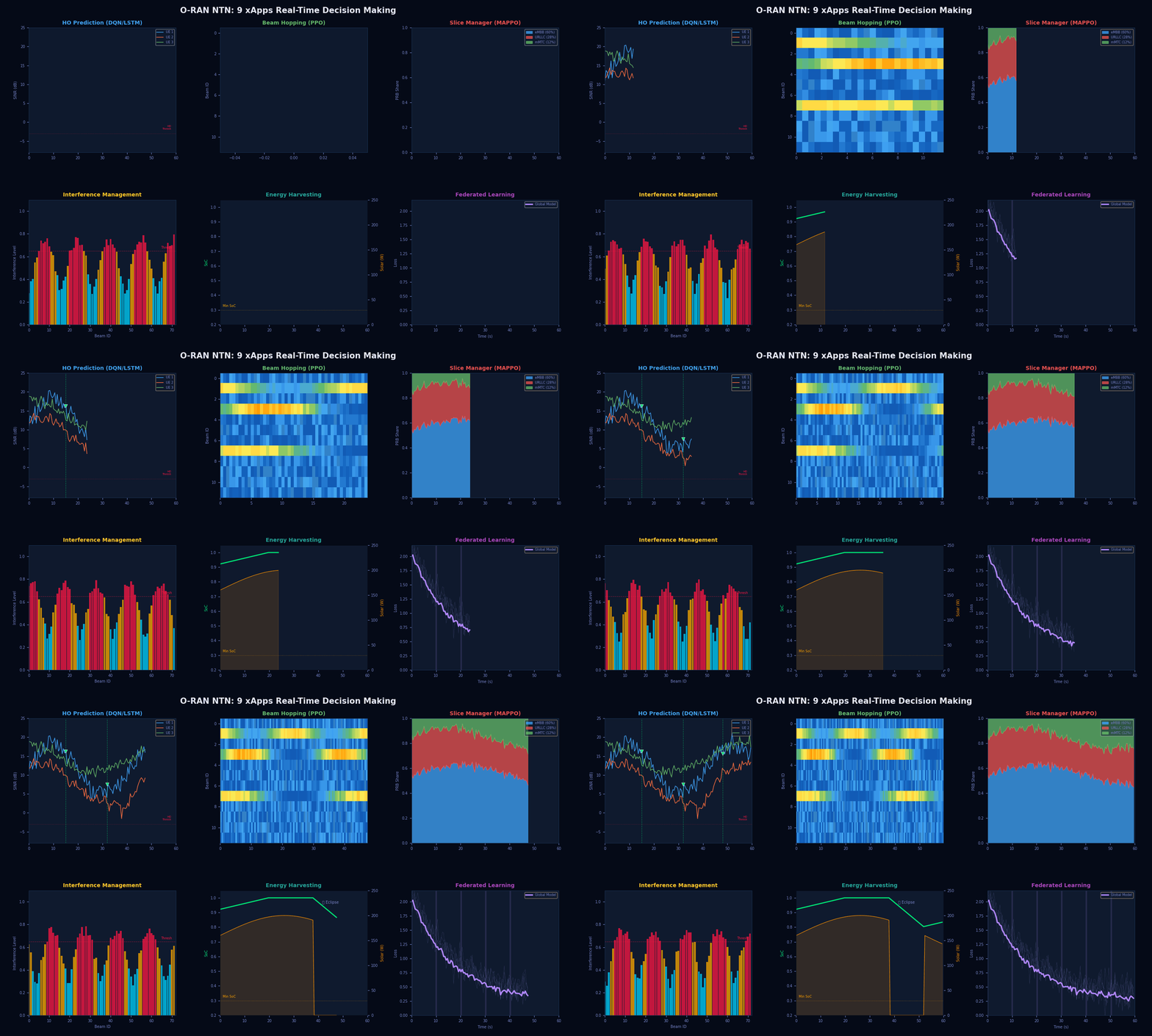
oran-ntn).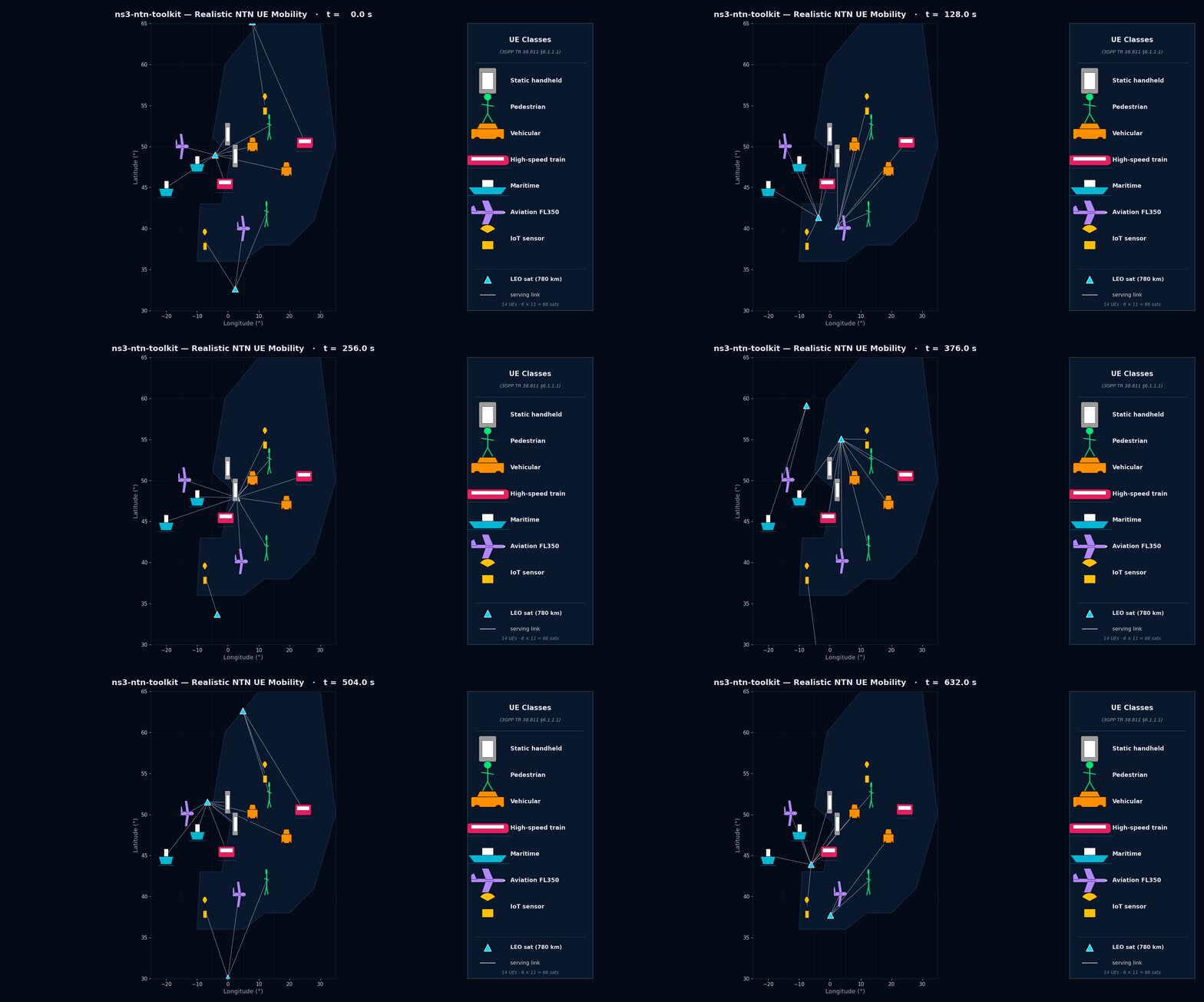
ntn-constellation).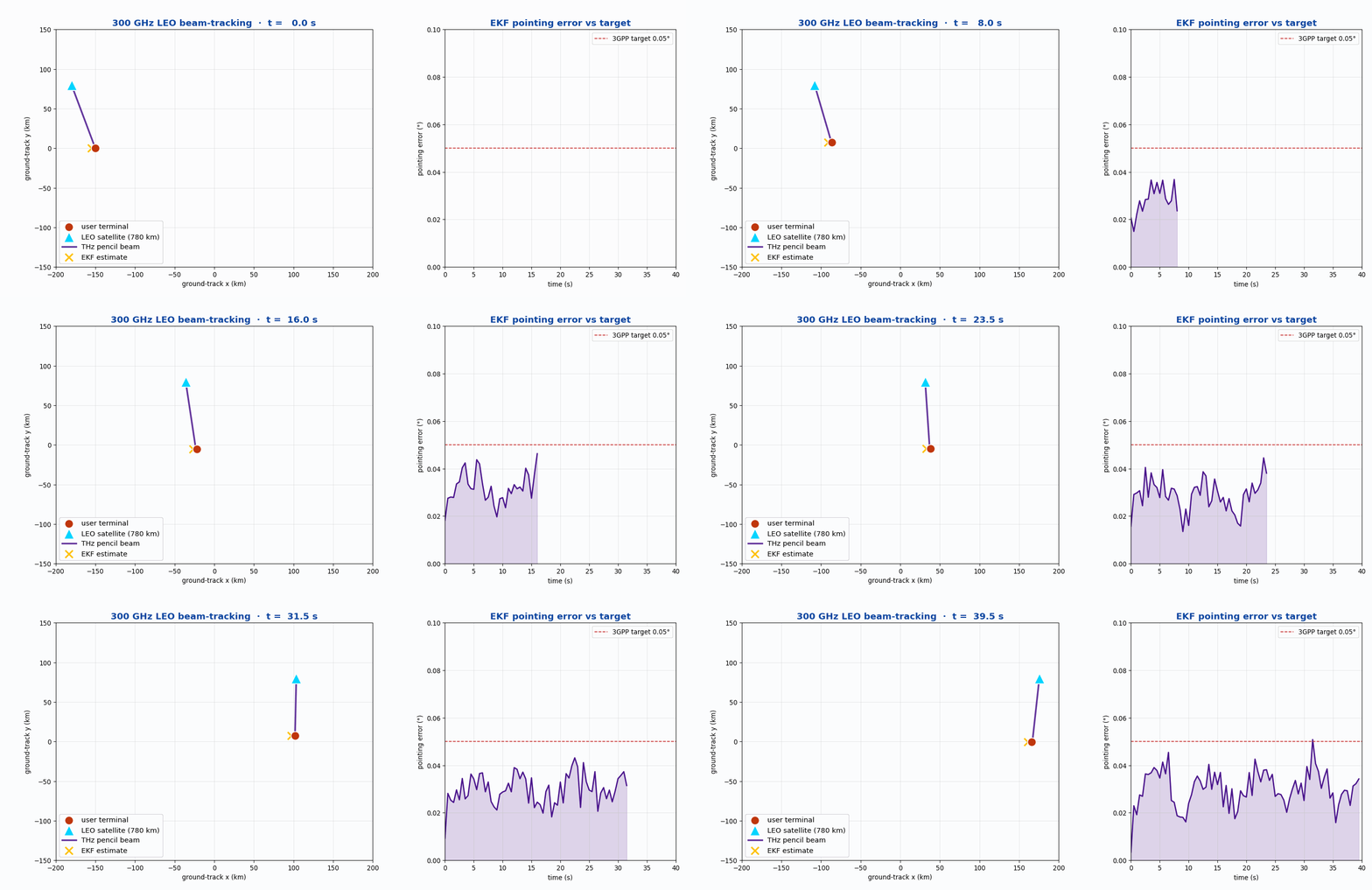
thz-ntn).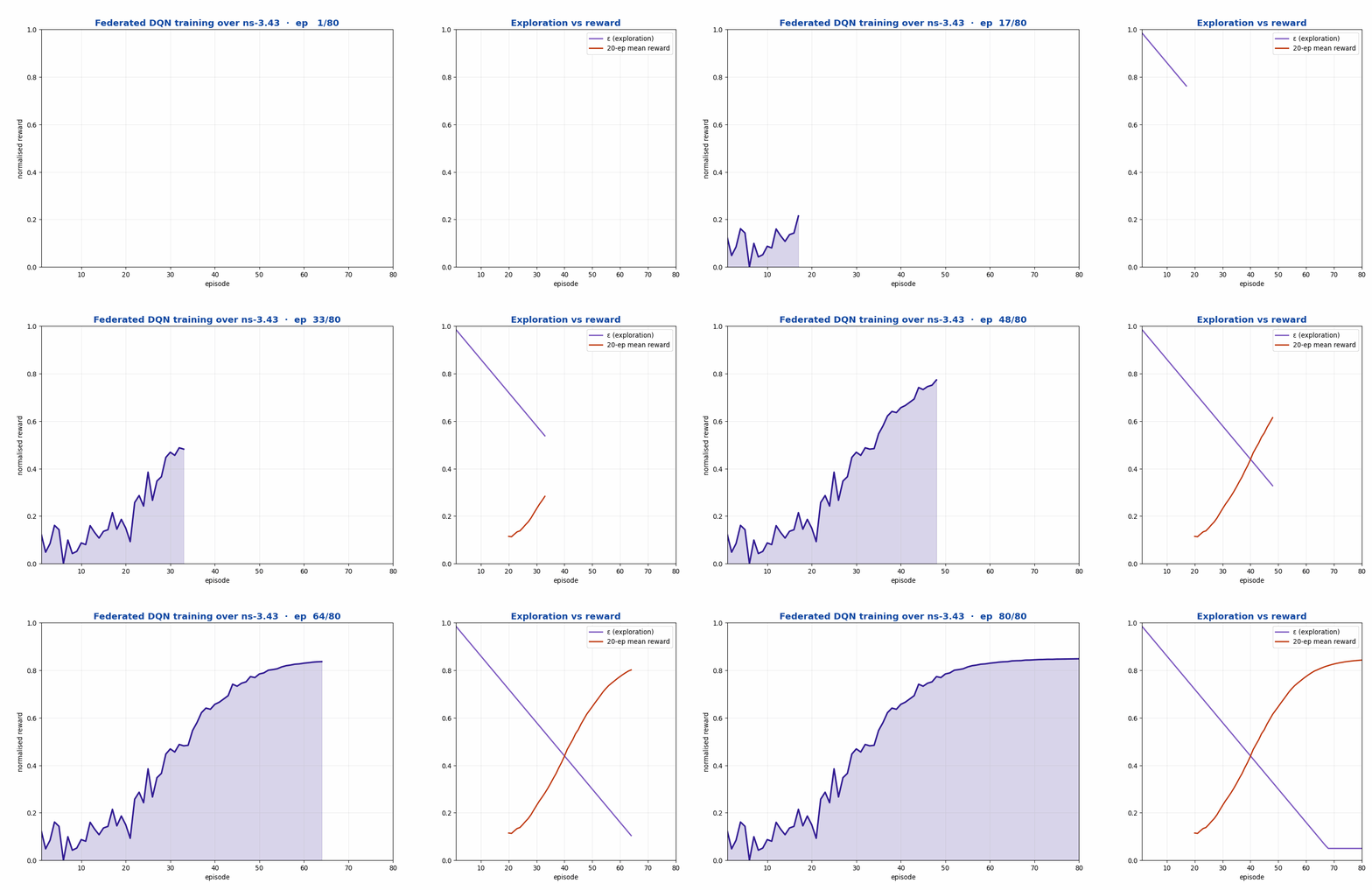
ns3-ai-ntn).Quickstart
# Clone the repo
git clone https://github.com/Muhammaduazir69/ns3-ntn-toolkit.git
cd ns3-ntn-toolkit/ns-3-dev

# Configure & build
./ns3 configure --enable-examples --enable-tests
./ns3 build

# Or pull the pre-built Docker image
docker run --rm -it uzairdocker69/ns3-ntn-toolkit:latest

# Run the live-Starlink demo
ntn-fetch starlink --out data/starlink-now \
    --max-sats 200 --czml --czml-duration-min 120 -v
Full installation instructions: Getting started.
Module map
| Module | Layer | What it does |
|---|---|---|
| ntn-constellation | Orbital | SGP4 and Walker shells from TLEs, contact-graph routing over inter-satellite links |
| ntn-sagin | Orbital | Ground, UAV, HAPS and LEO layers with TR 36.777 air-to-ground and multi-layer routing |
| ntn-v2x | Orbital | NR sidelink PC5 Mode 2, SAE J2735 basic safety messages, SUMO traces |
| ntn-traffic | L1 to L3 | The real-stack spine: NR PHY, HARQ, RLC, PDCP, RRC and EPC under satellite mobility |
| ntn-cho | L1 to L3 | Time-to-exit conditional handover, the full TS 38.331 NTN trigger set |
| ntn-rrc | L1 to L3 | SIB19 consumed by the scheduler, payload-aware timing advance, gating DRX |
| ntn-fapi | L1 to L3 | SCF-222 FAPI MAC-PHY adapter on a live NR SAP |
| ntn-slice | L1 to L3 | eMBB, URLLC and mMTC with per-5QI bearers and histogram SLA percentiles |
| thz-ntn | Physical | 100 GHz to 1 THz on ITU-R P.676-13, P.618-13, P.838-3 and P.840 |
| ntn-sionna | Physical | NVIDIA Sionna RT GPU ray tracing with per-query provenance |
| oran-ntn | Control | Space O-RAN: E2, A1, three RIC placements, regenerative payloads, FlexRIC bridge |
| ns3-ai-ntn | Control | Gymnasium 1.0 environments over a versioned shared-memory bridge |
| ntn-observability | Operations | NetSimulyzer, Cesium CZML, InfluxDB and Grafana from one scene recorder |
| ntn-digital-twin | Operations | FastAPI twin that predicts handovers and actuates them back into the run |
| satellite (SNS3) | Vendored | SGP4 mobility, DVB-S2 and RCS2, antenna patterns, TLE corpus |
Frequently asked questions
What is the best open-source ns-3 simulator for LEO satellite / non-terrestrial networks?
ns3-ntn-toolkit is purpose-built for it. Unlike a single channel model or a flow-level LEO simulator, it integrates SGP4 orbit propagation, 3GPP TR 38.811 channels, a real 5G NR data plane, Rel-17 conditional handover, an O-RAN Near-RT RIC, and sub-THz physics in one ns-3.43 distribution - so you simulate the whole non-terrestrial stack, not one layer.
How do I simulate 5G NR-NTN conditional handover (CHO) in ns-3?
Use the ntn-cho module. It implements the full 3GPP Rel-17/18 NTN CHO trigger set - measurement A3, location-based condEventD1, time-based condEventT1, timing-advance, elevation, and Rel-18 condEventD2 - selectable in one example, executed over SGP4-propagated orbits with handovers driven by measured serving SINR. ./ns3 run "ntn-cho-real-stack --trigger=tte-aware".
Is there an open-source O-RAN simulator for non-terrestrial networks?
Yes - the oran-ntn module provides an O-RAN Near-RT RIC + on-board Space RIC with xApps, real E2AP/E2SM ASN.1-PER over SCTP, a FlexRIC bridge, and canonical TS 28.552 KPM metrics measured off the PHY. It is, to our knowledge, the first open-source ns-3 RIC-coupled NTN E2 testbed.
Can ns-3 simulate terahertz / sub-THz (100 GHz–1 THz) satellite links?
Yes. The thz-ntn module implements ITU-R P.676-13 line-by-line molecular absorption over a layered atmosphere, P.618-13 tropospheric scintillation, P.838-3 rain and P.840 fog, plus RIS, ISAC and EKF beam tracking, as real ns-3 propagation-loss models chained onto the radio, so THz physics attenuate actual packets and show up in the measured SINR.
Does it support real Starlink / OneWeb / Iridium constellations?
Yes - ntn-constellation propagates real CelesTrak TLEs (Starlink, OneWeb, Kuiper, Iridium NEXT, Telesat) with a full Vallado SGP4 backend, and generates Walker-Delta / Walker-Star shells at any scale (a 1,584-satellite scenario runs in ~32 seconds on a desktop).
How is it different from SNS3, Hypatia, or other LEO network simulators?
SNS3 is DVB-S2/RCS2 (no NR); Hypatia is flow-level routing/latency. ns3-ntn-toolkit adds the 3GPP 5G NR-NTN protocol stack, O-RAN control, conditional handover, sub-THz physics, Sionna ray tracing, and AI/ML hooks on top of real orbital mobility - and reuses SNS3's satellite channel where it helps. It targets protocol-level fidelity at constellation scale.
Citation
If this toolkit helps your research, please cite (see also Cite):
@software{uzair_ns3_ntn_toolkit_2026,
  author       = {Muhammad Uzair},
  title        = {{ns3-ntn-toolkit: An open-source ns-3 distribution
                   for 6G non-terrestrial network research}},
  year         = {2026},
  url          = {https://github.com/Muhammaduazir69/ns3-ntn-toolkit},
  orcid        = {0009-0002-4104-2680}
}
Maintainer
Muhammad Uzair · Independent Researcher · muhammaduzairr69@gmail.com · ORCID